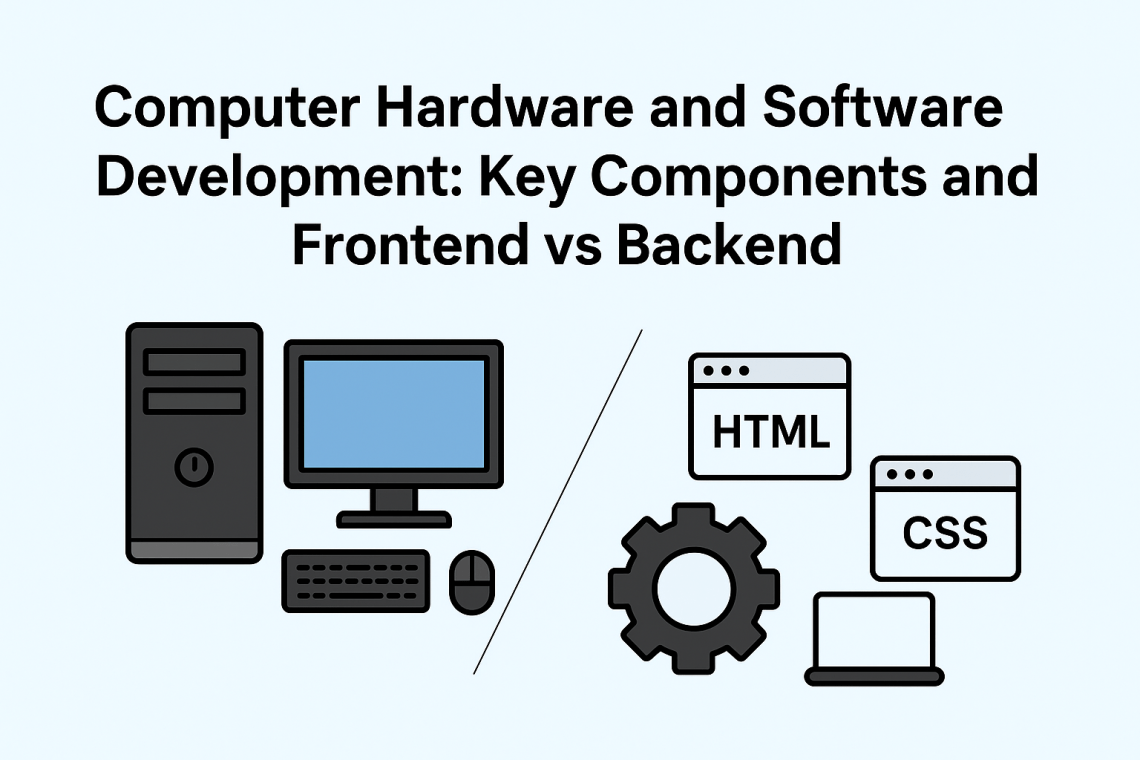
What is Computer Hardware?
Computer hardware refers to the physical parts of a computer system. Unlike software, which is a set of programs and instructions, hardware is the tangible equipment you can touch and see. Every part of a computer, from the processor inside the machine to the monitor on your desk, plays a role in keeping the system functional.
Without hardware, software would have no platform to run on. Together, they form the foundation of modern computing.
Key Components of a Computer System
A computer system is built on several critical components that work together. Here are the most important ones:
1. Central Processing Unit (CPU)
Often called the “brain of the computer”, the CPU handles instructions and processes data. It ensures smooth communication between hardware and software.
2. Motherboard
The motherboard is the main circuit board that connects all other components, including the CPU, RAM, storage, and peripheral devices.
3. Random Access Memory (RAM)
RAM is temporary storage that holds active data and instructions. More RAM generally means faster performance and smoother multitasking.
4. Storage Devices (HDD or SSD)
Storage devices hold your files and software permanently. SSDs are faster and more reliable, while HDDs are cheaper but slower.
5. Graphics Processing Unit (GPU)
The GPU handles graphics and visual output. It is especially important for gaming, video editing, and design work.
6. Power Supply Unit (PSU)
This provides electricity to all parts of the computer. Without a working PSU, nothing powers on.
7. Cooling System
Fans and heat sinks prevent the system from overheating during heavy use.
8. Input and Output Devices
-
Keyboard and Mouse: Allow users to interact with the computer.
-
Monitor: Displays information visually.
-
Printer and Scanner: Provide additional functionality.
Main Point: These components together make up the physical foundation of a computer system. If one fails, the overall performance can suffer. Regular upgrades and maintenance keep systems reliable and efficient.
Software Development: The Role of Frontend and Backend
While hardware is physical, software development focuses on building applications that run on those systems. In modern development, there are two major areas: frontend and backend.
What is Frontend Development?
Frontend development is everything the user sees and interacts with. It covers the design, layout, and usability of websites or applications.
-
Technologies Used: HTML, CSS, JavaScript, React, Angular, Vue
-
Focus: User interface (UI) and user experience (UX)
-
Example: Buttons, navigation menus, forms, animations
What is Backend Development?
Backend development is the server-side of an application. It ensures that the frontend has access to the right data and functions properly.
-
Technologies Used: Python, Java, Node.js, PHP, SQL
-
Focus: Databases, APIs, server logic, authentication
-
Example: User login system, data storage, payment processing
Key Differences Between Frontend and Backend
| Aspect | Frontend | Backend |
|---|---|---|
| Focus | User interface and design | Server logic and database |
| Languages | HTML, CSS, JavaScript frameworks | Java, Python, Node.js, PHP |
| Purpose | Makes apps look and feel usable | Makes apps functional and secure |
| User Interaction | Direct (visible to users) | Indirect (works behind the scenes) |
Main Point: Frontend is what users experience, while backend is what makes everything run smoothly in the background. Together, they create complete and functional applications.
Why Understanding Both Matters
Just like hardware and software depend on each other, frontend and backend developers must collaborate. A fast backend without a polished frontend leads to a poor user experience, while a beautiful frontend without a strong backend won’t function properly.
In the tech industry, this collaboration is known as full-stack development, where a developer works on both sides.
Conclusion
Computer hardware provides the foundation for computing, while software development ensures that users can interact with powerful and functional applications. Understanding the key hardware components (CPU, motherboard, RAM, storage, GPU, PSU, cooling, and input/output devices) is essential for building or maintaining systems. Similarly, knowing the difference between frontend and backend development helps in appreciating how digital products are designed and powered.


Hi, this is a comment.
To get started with moderating, editing, and deleting comments, please visit the Comments screen in the dashboard.
Commenter avatars come from Gravatar.